運動生理週訊(第144期)
肌力訓練的交叉遷移(cross education)(May 27, 2003)
王順正
網友指出「最近在運動訓練的書上看到,只對右手實施肌力訓練左手肌力也會增加。為此感到有點疑惑,運動訓練不是有所謂的特殊性嗎?敢問各位體育界的老師:1.造成此一原因的生理學機轉為何?2.只對右手實施肌力訓練右腳肌力會增加嗎?3.左右手同時實施肌力訓練與只對右手實施肌力訓練相較左手肌力的增加幅度哪一個大?(
肌力訓練的學習遷移?)」
Andes Cheng回覆「Physiological mechanisms causing increased strength (Neural factors):It has become clear that a portion of the gains in strength that occurs with training, especially early in a program, is due to neural adaptations and not an enlargement of muscle. The neural adaptations related to learning, coordination, and the ability to recruit prime movers play a major role in the gain in strength(Powers & Howley,2001.p253-254)。由此觀之,在訓練初期,由於肌力訓練造成motor unit神經傳導上的適應,因此,訓練右臂時同時造成訓練效果的轉移,左臂的肌力隨之提昇。但須注意的是,此現象僅止於訓練初期,爾後的肌力增進,仍需透過肌纖維肥大的適應現象,而提高肌肉作功能力。」
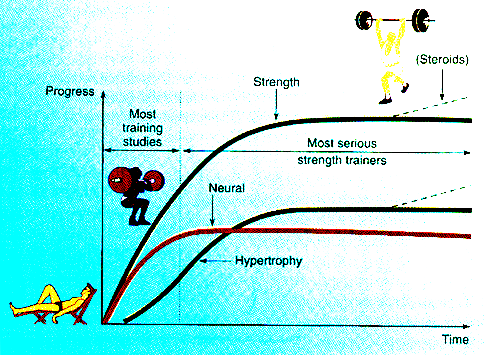
肌力訓練時,神經與肌肉適應的關連角色圖
Shields等人(1999)將24名平均年齡26.2歲的男性受試者,分成四組進行六週不同方式的右手握力耐力訓練,一組受試者以30%最大自主等長收縮握力(maximal voluntary isometric contraction for the handgrip force)進行節奏性的耐力訓練,一組受試者以30%最大自主等長收縮握力進行等長收縮訓練,一組受試者以最大自主等長收縮握力進行耐力訓練,最後一組則以幾乎沒有負荷的重量進行耐力訓練。研究結果發現,受試者的左手握力的訓練交叉遷移效果,並不會受到右手握力訓練時的強度影響。也就是說,透過訓練交叉遷移方式進行對稱部位的肌力訓練時,可以不用考慮到訓練的強度。
Mahler(1995)則將24名健康的大學男學生,平均分配到控制組、等速離心訓練組(single-limb isokinetic eccentric training)、以及等速向心訓練組(single-limb isokinetic concentric training),在五週的的訓練中,每次訓練包含腿部兩組每秒60度與兩組每秒120度的不同等速訓練內容。研究結果發現,等速離心訓練組的訓練腿與非訓練腿的肌力增加了11%與9.6%,等速向心訓練組的訓練腿與非訓練腿的肌力增加了9.8%與8.6%。似乎以等速離心訓練組具備較高的訓練交叉遷移效果。Hortobagyi等人(1997)的研究也發現12週的單側肌力訓練,離心式肌力訓練對於交叉遷移的效果比向心式肌力訓練還來的好。
Shima(2002)利用肌電圖的方法評量足背收縮肌群(plantar flexor muscles)肌力的學習遷移與停止訓練的原因。六週、每週四天、每天三組、每組10至12次、70%至75%1RM負荷的訓練,以及連續六週的停止訓練後,發現肌力訓練的交叉遷移可以解釋為神經傳導的增進,但是停止訓練的肌力下降現象,則無法由神經的傳導影響解釋。
Zhou(2002,
周石博士任教於澳洲Southern Cross University)則發現四週的65%的膝關節最大自主收縮力量伸展訓練與電刺激,對於訓練腿的膝關節伸肌肌群具有相似的肌力增進效果(在等速測量器上進行每秒0度(isometric)、每秒60度與每秒180度的等速肌力測試),非訓練腿的膝關節伸肌肌群的最大等長自主收縮肌力(每秒0度)也分別增加了21.4%與21.1%,但是在其他等速收縮測驗上的肌力結果,並沒有顯著的增進。針對電刺激也會出現交叉遷移的現象,更證明了交叉遷移主要是因為神經性的增進效果所致。
Bemben與Murphy(2001)則針對10名平均年齡58.1歲的老年女性受試者,以及10名平均年齡20.8歲的年輕女性受試者,進行14天、每天四組、每組70%最大肌力的右手肘關節曲肌訓練,研究結果發現,右側與左側的肘關節最大等長收縮力量增加了28%與12%(老年)至15%(年輕),上臂的的橫斷面積(upper arm cross-sectional area)則沒有顯著的改變,肱二頭肌的電位活動效率(efficiency of electrical activity)卻下降了12%至16%。這個研究再次證明了,短期(14天)的單側肌力訓練,造成非訓練側肌力增加的原因,主要來自於電位活動的變化,肌肉的橫斷面積並沒有顯著的改變。研究結果還發現,年齡的因素並不會影響到肌力訓練的交叉遷移效果。
如果要詳細的回覆先前網友提出的問題,很明顯的,直接訓練的效果顯然比交叉遷移的效果還來的高,如果因為受傷或其他特殊的因素,需要進一步透過交叉遷移的間接訓練才可以達成時,才有必要考慮到肌力訓練的交叉遷移效果。此外,手與腳的肌力訓練交叉遷移效果並沒有研究進行探討,似乎手腳的交叉遷移現象有值得進一步研究的可能,可是以現有的資料來看,似乎以「特殊性」的可能較高(手與腳可能不會有交叉遷移的效果)。
參考資料:
Bemben, M. G., & Murphy, R. E. (2001). Age related neural adaptation following short term resistance training in women. Journal of Sports Medicine and Physical Fitness.41(3),291-299.
Hortobagyi, T., Lambert, N. J., & Hill, J. P. (1997). Greater cross education following training with muscle lengthening than shortening. Medicine and Science in Sports and Exercise.29(1),107-112.
Mahler, E. B. (1995). Cross-education following single-limb eccentric and concentric training on the Biodex isokinetic dynamometer. Microform Publications, Int'l Institute for Sport and Human Performance, University of Oregon.
Powers, S. K., & Howley, E. T. (2001). Exercise Physiology - Theory and Application to Fitness and Performance. Fourth Edition. McGraw-Hill Higher Education.p253-254.
Shields, R. K., Leo, K. C., Messaros, A., & Somers, V. K. (1999) Effects of repetitive handgrip training on endurance, specificity, and cross-education. Physical Therapy,79(5),467-475.
Shima, N., Ishida, K., Katayama, K., Morotome, Y., Sato, Y., & Miyamura, M. (2002). Cross education of muscular strength during unilateral resistance training and detraining. European Journal of Applied Physiology,86(4),287-294.
Zhou, S., Oakman, A., & Davie, A. (2002). Effects of unilateral voluntary and electromyostimulation training on muscular strength of the contralateral limb. The Hong Kong Journal of Sports Medicine and Sports,14,1-10.


![B 吤芠z М リげ] B V m](../../blog/photo/pic/20181022105806.jpg)